

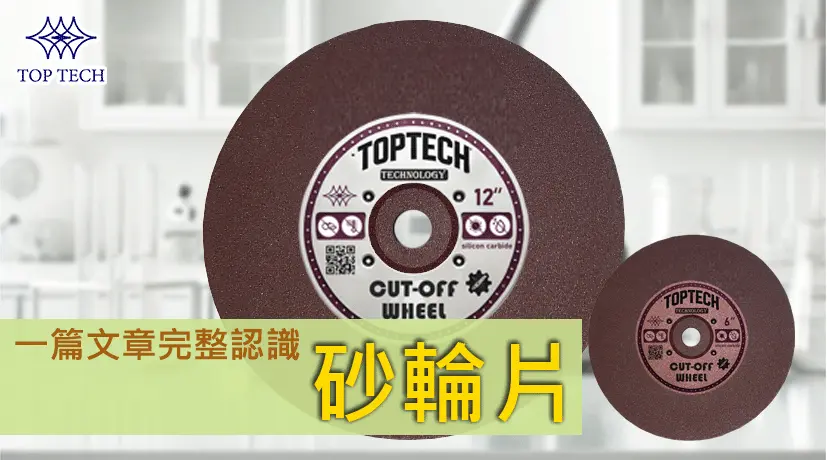
- 1. What Is a Cut-Off Wheel? Uses, Working Principles & Applications
- 2. How to Read Cut-Off Wheel Specifications (5 Key Factors Explained)
- 3. Pros and Cons of Cut-Off Wheels
- 4. Proper Use & Maintenance (How to Prevent Breakage and Burning)
- 5. Industry Applications: Semiconductor, Electronics, Aerospace & Automotive
- 6. Recommended Cut-Off Wheels for Different Machines
- 7. Frequently Asked Questions (FAQ)
What Is a Cut-Off Wheel? Uses, Structure, and Cutting Principles Explained
1. What Is a Cut-Off Wheel? Structure and Core Characteristics
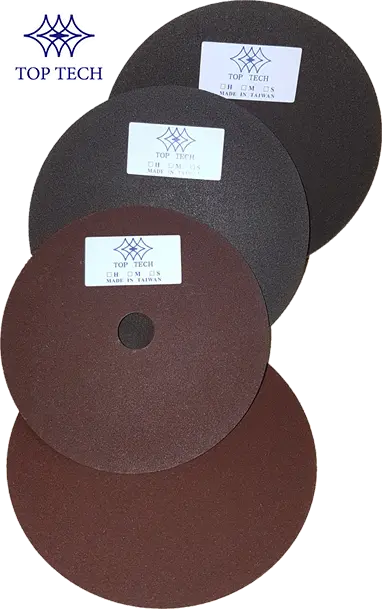
A cut-off wheel (also called an abrasive cutting wheel) is manufactured from specialized abrasive grains such as aluminum oxide or silicon carbide, combined with various grit sizes (#10–#4000+), bond strengths, and organic bonding agents. It is primarily used for cutting, slotting, and material sectioning.
During operation, the wheel rotates at high speed and performs narrow, precise cuts at a 90-degree angle into materials such as metal, plastics, concrete, ceramics, and composites.
In industries such as semiconductor manufacturing, electronics, aerospace, and materials testing, cut-off wheels are widely used for metallographic sample preparation. They provide flat, controlled cutting surfaces, minimizing thermal damage and preserving microstructure for accurate microscopic analysis.
Different abrasive materials and grit sizes are selected based on material hardness and application requirements. This flexibility makes cut-off wheels an essential tool in materials research and industrial quality control.
2. What Regulations or Certifications Apply to Cut-Off Wheels?
Although cut-off wheels are common industrial tools, many jurisdictions impose strict safety regulations.
Since 2017, Taiwan has required that general-purpose abrasive wheels sold on the market carry the OSHA-certified TS Safety Mark. This certification confirms that the product has passed required safety testing, including burst speed testing, and meets regulatory standards for legal sale.
In the United States, the OSHA (Occupational Safety and Health Administration) requires proper guarding, inspection, and installation when operating abrasive cutting equipment.
In the European Union and United Kingdom, bonded abrasive products must comply with EN 12413 standards and display CE or UKCA marking.
The UK’s PUWER Regulations require employers to:
- Provide operator safety training
- Maintain equipment in safe condition
- Conduct regular inspection and risk assessment
It is important to note that many metallographic cut-off wheels are machine-specific products, designed with dedicated arbor sizes and RPM compatibility. These are often classified as machine-dedicated consumables rather than general-purpose abrasive wheels. They are not intended for handheld angle grinders and may fall outside general retail certification categories.
General-purpose abrasive wheels and machine-dedicated metallographic wheels may fall under different regulatory classifications. Always verify certification requirements before use.
Improper operation of high-speed rotating equipment may result in serious injury or legal liability.
3. Why Use Dedicated Metallographic Cut-Off Wheels?
Specialized cut-off wheels are engineered to reduce heat-affected zones (HAZ) during cutting. This is critical for heat-treated steels, composites, and temperature-sensitive materials. In most applications, coolant is still recommended to control heat buildup.
A smooth cutting surface also reduces the need for extensive grinding and polishing, improving overall sample preparation efficiency.
In high-precision research and quality inspection, the cutting process directly affects final analysis results. Selecting the correct cut-off wheel is therefore a critical step in materials testing.
4. How Does a Cut-Off Wheel Remove Material?
Material removal occurs through abrasive interaction. As the wheel rotates at high speed, abrasive grains continuously scratch and fracture the material surface, gradually removing layers and forming a clean cut face.
Both the wheel and the workpiece experience wear during cutting. Material hardness and toughness directly influence wear rate and cutting efficiency.
(1) How to Choose a Wheel for High-Hardness Materials (Tool Steel, Alloy Steel)?
For hard materials, select a softer bond grade. A softer bond allows worn abrasive grains to release quickly, exposing fresh sharp grains and maintaining cutting efficiency.
(2) Why Use Harder Bond Wheels for Soft Materials (Aluminum, Copper)?
Softer materials cause slower abrasive wear. A harder bond helps retain abrasive grains longer, preventing premature grain loss and improving wheel life.
Selecting the correct wheel based on material properties improves cutting quality, protects internal structure, and extends tool lifespan.
Contact Us / Request a QuoteHow to Read Cut-Off Wheel Specifications: Material, Grit Size, Hardness, Bond Strength & Bond Type Explained
The performance of a cut-off wheel largely depends on its composition and structure. Abrasive material, grit size, bond strength, and bond type all influence cutting efficiency, durability, heat resistance, and surface finish. Selecting the right combination ensures optimal cutting performance and protects the integrity of metallographic samples.

1. Abrasive Materials: What Do A, WA, 32A, and GC Mean?
The abrasive material determines hardness, toughness, and application range. The most common materials used in cut-off wheels are aluminum oxide and silicon carbide.
| Code | Abrasive Type | Composition | Hardness | Toughness |
|---|---|---|---|---|
| A | Aluminum Oxide | 95–97% Al₂O₃ | High | High |
| WA | White Aluminum Oxide | ≥98% Al₂O₃ | Very High | Medium–Low |
| 32A | Premium Aluminum Oxide | ≥98% Al₂O₃ | High | High |
| GC | Green Silicon Carbide | ≥99% SiC | Extremely High | Brittle |
| Code | Abrasive Type | Recommended Materials | Typical Applications |
|---|---|---|---|
| A | Aluminum Oxide | Carbon Steel, Stainless Steel | General Metal Cutting |
| WA | White Aluminum Oxide | Hardened Steel, Tool Steel | Precision Metallographic Cutting |
| 32A | Premium Aluminum Oxide | Nickel-Based Alloys, Stainless Steel | Aerospace Materials |
| GC | Green Silicon Carbide | Ceramics, Aluminum, Copper, Glass | Non-Ferrous & Brittle Materials |
(1) Why Is A-Type Aluminum Oxide Suitable for General Metals?
Standard aluminum oxide contains 95–97% Al₂O₃ and offers good toughness. It resists chipping and performs well when cutting carbon steel, stainless steel, and general alloys.
(2) Why Is WA Ideal for Hardened Steel?
White aluminum oxide contains over 98% Al₂O₃ and provides higher hardness. Although more brittle, it delivers excellent precision cutting for hardened steel, tool steel, and heat-treated materials.
(3) Why Choose 32A for High-Performance Alloys?
32A provides a better balance of hardness and toughness, reducing fracture risk during cutting. It is commonly used for metallographic analysis of stainless steel and nickel-based alloys.
(4) Why Is GC Suitable for Ceramics and Non-Ferrous Metals?
Green silicon carbide offers extremely high hardness and is ideal for brittle materials such as ceramics, glass, aluminum, and copper. It produces smooth and controlled cutting surfaces.
2. How to Choose the Right Grit Size (#10–#4000)?
Grit size refers to the size of abrasive particles. It directly affects cutting speed and surface finish quality.
| Grit Range | Category | Cutting Speed | Surface Finish | Recommended Use |
|---|---|---|---|---|
| #10–#100 | Coarse | Fast | Rough | Heavy Material Removal |
| #100–#600 | Medium | Moderate | Smooth | Standard Metallographic Cutting |
| #800–#4000 | Fine | Slower | Ultra Smooth | Semiconductor & Precision Samples |
3. How to Select Bond Strength (H–Z Hardness Scale)?
Bond strength determines how firmly abrasive grains are held. The correct bond grade depends on material hardness.
| Material Hardness | Recommended Bond Grade | Reason |
|---|---|---|
| High (Tool Steel) | Low Bond (H–K) | Allows self-sharpening for cutting efficiency |
| Medium (General Metals) | Medium Bond (L–P) | Balanced wear and stability |
| Low (Aluminum, Copper) | High Bond (Q–Z) | Prevents premature grain shedding |
4. Bond Types: Vitrified, Resin, Electroplated, or Metal Bond?
The bond type affects rigidity, toughness, heat resistance, and overall cutting performance.
| Bond Type | Rigidity | Toughness | Heat Dissipation | Typical Applications |
|---|---|---|---|---|
| Vitrified | High | Low | Excellent | High-Hardness Metals |
| Resin | Medium | High | Moderate | Precision Cutting |
| Electroplated | Very High | Low | Moderate | Carbide & Hard Materials |
| Metal Bond | Extremely High | Low | Lower | Long-Term Stable Cutting |
Choosing the correct combination of abrasive material, grit size, bond strength, and bond type ensures stable cutting performance, longer wheel life, and optimal sample integrity.
Contact Us / Request a QuotePros and Cons of Cut-Off Wheels: Applications and Limitations
Cut-off wheels are widely used in materials science and metallographic sample preparation. They offer significant advantages in precision cutting and material versatility, but they also come with certain limitations. Understanding both the strengths and risks helps users select the right wheel, improve cutting efficiency, and maintain sample integrity.
1. What Are the 4 Key Advantages of Cut-Off Wheels?
(Precision, Efficiency, Stability, Material Versatility)
(1) High Cutting Precision and Surface Quality
A properly selected cut-off wheel can deliver clean, controlled cuts with minimal damage. This is especially critical in metallographic applications where preserving microstructure is essential for accurate analysis. Reduced deformation means better downstream inspection results.
(2) Reduced Grinding and Polishing Time
Because cut-off wheels can produce relatively smooth cut surfaces, the time required for subsequent grinding and polishing is significantly reduced. A flatter surface minimizes material removal in later stages, saving both labor and consumables.
(3) Wide Material Compatibility
Cut-off wheels are available in multiple abrasive materials, including aluminum oxide and silicon carbide, allowing them to handle a broad range of materials. Aluminum oxide works well for steel and general metals, while silicon carbide is better suited for non-ferrous metals, ceramics, and brittle materials. This versatility makes them suitable for laboratories and industrial environments.
(4) High Operational Stability
High-quality cut-off wheels provide stable cutting performance with reduced vibration and material movement. This stability is critical when cutting thin, delicate, or brittle samples. Improved stability enhances safety and increases cutting accuracy.
2. Common Limitations and Risk Factors of Cut-Off Wheels
(1) Strong Dependence on Proper Material Selection
Cut-off wheel performance is highly dependent on selecting the correct abrasive type, grit size, and bond strength for the specific material. Using the wrong wheel can result in poor cutting quality, excessive wear, overheating, or even sample damage.
When cutting high-hardness materials, wheel wear tends to accelerate—especially if the wheel is not rated for that hardness range. Frequent replacement may be required to maintain cutting performance and surface quality. This increases operational cost and maintenance complexity.
(2) Fragility and Breakage Risk
Some cut-off wheels—particularly high-hardness aluminum oxide and silicon carbide wheels—can be brittle. Excessive cutting pressure, side loading, or improper installation may cause cracking or sudden breakage. Following correct mounting and operating procedures is essential to reduce safety risks.
Contact Us / Request a QuoteProper Use and Maintenance of Cut-Off Wheels (Prevent Breakage and Overheating)
Proper installation, operation, and storage of cut-off wheels are critical for both cutting performance and operator safety. Incorrect RPM settings, improper mounting, or poor storage conditions can lead to wheel failure, excessive heat generation, or sudden breakage. Understanding these best practices helps extend wheel life and reduce safety risks.
| Item | Recommended Practice |
|---|---|
| Maximum RPM | Never exceed the rated speed printed on the wheel |
| Flange Tightening | Tighten evenly to avoid eccentric loading |
| Coolant | Required when cutting high-hardness materials |
| Storage Environment | Store in dry conditions, avoid high temperatures |
| Storage Position | Store vertically to prevent warping |
1. Key Installation and Operating Guidelines
Always adjust cutting parameters based on both the wheel specification and the material being cut. Improper setup can reduce cutting efficiency and increase safety risks.
(1) How Tight Should the Flange Be?
After mounting the cut-off wheel, ensure the flange and retaining nut are securely tightened — but not over-tightened. Excessive torque may create internal stress, increasing the risk of cracking or breakage during operation.
(2) How Should RPM Be Set to Prevent Wheel Failure?
The machine RPM must never exceed the maximum rated speed printed on the wheel. For harder materials, use lower feed pressure and controlled cutting speed to reduce heat buildup and wheel wear. Softer materials may allow higher feed rates, but RPM must always remain within specification.
(3) Why Is Coolant Important?
During cutting—especially with hardened steel or high-density materials— friction heat can accumulate rapidly. Excessive heat may cause material discoloration, microstructural damage, or thermal distortion. Using coolant helps control temperature, protect sample integrity, and extend wheel lifespan.
2. Do Cut-Off Wheels Expire? Storage and Environmental Effects
Yes. Storage conditions significantly affect bond integrity and overall performance. Resin-bond wheels in particular are sensitive to humidity and temperature.
(1) Store in a Dry Environment
Moisture can weaken the bonding agent, leading to reduced structural strength and unstable cutting performance. Always store wheels in a controlled, low-humidity environment.
(2) Avoid Direct Sunlight
Prolonged exposure to UV light may degrade bonding materials, especially resin bonds, causing brittleness or premature aging. Store wheels away from direct sunlight.
(3) Keep Away from High Temperatures
Excessive heat can alter bond properties and reduce mechanical stability. Store cut-off wheels at room temperature and keep them away from heaters or industrial heat sources.
(4) Store Vertically
Wheels should be stored upright whenever possible. Stacking them flat for extended periods may cause deformation or warping, especially for larger-diameter wheels.
Contact Us / Request a QuoteIndustry Applications of Cut-Off Wheels: Semiconductor, Electronics, Aerospace & Automotive
Cut-off wheels are widely used across multiple industries. Each industry has different precision requirements, material characteristics, and cooling needs. Selecting the correct abrasive type and grit size ensures stable cutting performance and reliable sample preparation.
| Industry | Precision Level | Recommended Abrasive | Recommended Grit | Cooling Required |
|---|---|---|---|---|
| Semiconductor | ★★★★★ | WA / GC | #200–#400+ | Required |
| PCB & Electronics | ★★★★☆ | GC | #150–#400 | Recommended |
| Aerospace | ★★★★☆ | WA / 32A | #100–#200 | Required |
| Automotive | ★★★☆☆ | A / 32A | #80–#150 | Recommended |
| General Metal Fabrication | ★★☆☆☆ | A | #36–#100 | Optional |
1. How Are Cut-Off Wheels Used in the Semiconductor Industry?
The semiconductor industry requires extremely high cutting precision and dimensional stability. Cut-off wheels are commonly used for preparing samples of wafers, ceramic substrates, and precision components prior to microscopic inspection or failure analysis.
(1) Wafer Cutting Applications
Wafer sectioning demands exceptional stability and minimal vibration. In many advanced applications, diamond blades are preferred for ultra-precision cutting. However, fine-grit abrasive wheels are still used in certain metallographic preparation processes.
(2) Ceramic Substrate Cutting
Semiconductor substrates and packaging materials are often ceramic-based and highly brittle. Green silicon carbide (GC) cut-off wheels are commonly used due to their high hardness, helping reduce cracking and edge chipping.
2. PCB and Electronics Cutting Applications
In the electronics industry, cut-off wheels are widely used for PCB cross-section preparation and component analysis.
Printed circuit boards (PCBs) consist of composite materials such as fiberglass and copper layers. Because of their hardness and layered structure, silicon carbide wheels (GC) are typically recommended to achieve clean cuts without delamination.
3. Aerospace Cutting Solutions for High-Strength Materials
Aerospace materials often include heat-resistant alloys, stainless steel, and nickel-based superalloys. These materials demand high cutting stability and controlled heat generation.
(1) Stainless Steel Components
Stainless steel is widely used in aerospace structures due to its strength and corrosion resistance. White aluminum oxide (WA) wheels are commonly selected for their hardness and ability to maintain surface quality during cutting.
(2) Nickel-Based Alloys
Nickel-based alloys are frequently used in aircraft engines. Cutting these materials requires a balance of hardness and toughness. Premium aluminum oxide (32A) wheels are often preferred for their durability and precision cutting capability, making them suitable for metallographic sample preparation.
4. Automotive Manufacturing and Metallographic Analysis
In automotive manufacturing, cut-off wheels are used for sectioning engine components, structural parts, and composite materials for quality inspection and materials analysis.
(1) Crankshaft Sectioning
Crankshafts are typically made from heat-treated alloy steel. Due to their high hardness, premium aluminum oxide (32A) wheels are commonly used to ensure stable cutting and a smooth surface for microstructural examination.
(2) Oil Seal Cross-Section Analysis
Oil seals are composite materials combining rubber and metal layers. Because of varying hardness within the same component, silicon carbide wheels (GC) are recommended to handle multi-layer cutting without excessive deformation.
Across industries, cut-off wheels play a critical role in metallographic sample preparation, quality control, and materials research. With the right abrasive selection, they provide stable, repeatable cutting performance that supports accurate microstructural analysis.
Contact Us / Request a QuoteRecommended Cut-Off Wheels & TopTech Machine Compatibility Guide
TopTech cutting systems include both diamond cutting machines and precision abrasive cut-off machines. To achieve optimal cutting performance, selecting the correct wheel type and matching it with the appropriate machine model is essential for safety, stability, and precision.
1. Cut-Off Wheel Ordering Codes & Applications
S02A: Designed for low-hardness ferrous metals such as mild steel and low-carbon steel.
S02C: Suitable for higher-hardness ferrous metals including high-carbon steel and stainless steel.
S02F: Recommended for non-ferrous metals (aluminum, copper) and non-metal materials such as ceramics and plastics.
| Order Code | Material Category | Typical Materials | Application Notes |
|---|---|---|---|
| S02A | Ferrous Metals (Low Hardness) | Mild Steel, Low-Carbon Steel | General precision sectioning of steel materials |
| S02C | Ferrous Metals (High Hardness) | High-Carbon Steel, Stainless Steel | Recommended for harder steel alloys |
| S02F | Non-Ferrous & Non-Metal Materials | Aluminum, Copper, Ceramics, Plastics | Ideal for softer or brittle materials |
2. Machine Selection & Recommended Wheel Sizes
The correct machine model should be selected based on wheel diameter and cutting depth requirements. Proper machine-wheel compatibility ensures stable operation and consistent cutting results.
(1) Benchtop Diamond Cutting Machines
• Compatible wheel size: 6–8 inch
• Recommended models: CL50, CL65, CLM50, CLM35B, CLM35C
• Ideal for small to medium-sized precision samples in laboratory and R&D environments.
(2) Large Precision Abrasive Cutting Machines
• Compatible wheel size: 10–16 inch
• Recommended models: CK200B, CK200M, CK260B, CK360B, CK460B, CF250B, CF450S
• Suitable for larger workpieces requiring greater cutting depth and enhanced structural stability.
| Machine Type | Compatible Wheel Size | Recommended Models | Typical Applications |
|---|---|---|---|
| Benchtop Diamond Cutting Machine | 6–8 inch | CL50, CL65, CLM50, CLM35B, CLM35C | Precision cutting of small to mid-size samples |
| Large Precision Abrasive Cutting Machine | 10–16 inch | CK200B, CK200M, CK260B, CK360B, CK460B, CF250B, CF450S | Large workpieces and high-stability cutting tasks |
3. Safety Considerations
Safety is a critical factor when selecting a cutting machine. The CL40 model does not feature a fully enclosed safety guard. For this reason, precision abrasive cut-off wheels are not recommended for use with CL40.
Always select machines equipped with a full protective enclosure when operating high-speed abrasive wheels. This significantly reduces the risk of wheel fragment projection in case of unexpected breakage.
| Model | Precision Cut-Off Wheel Compatible? | Safety Notes | Recommendation |
|---|---|---|---|
| CL40 | ❌ Not Recommended | No full enclosure safety guard | Use fully enclosed models instead |
| Fully Enclosed Models | ✅ Compatible | Complete protective guard system | Complies with safe operating practices |
Frequently Asked Questions About Cut-Off Wheels
Recommended Reading
▉▎Metallographic Preparation Steps 2026|Got it in 3 minutes!
▉▎Metallographic Cutting Selecting 2026|5 Key Considerations
▉▎Metallographic Mounting Selecting 2026|5 Key Considerations
▉▎Metallographic Grinding and Polishing Selecting 2026|5 Key Consideration
Recommended Products
▉▎Highly Favored by Government and Academic Institutions, Achieving Precision of Up to 0.01mm! (CLM50)
▉▎Fully Automatic Mounting Press: The Top Choice for Research and Quality Control. (ML-L1A)